ETHICS & POLICIES
- Research Integrity
Research integrity refers to the commitment of scholars to follow the highest standards of academic honesty throughout the research process. It requires researchers to be truthful in the collection, analysis, and reporting of data. Integrity ensures that no part of the research is fabricated, falsified, or manipulated for personal gain. Researchers must present findings exactly as they emerge from scientific inquiry, without exaggeration or suppression of results. By upholding integrity, the journal maintains trust among readers, safeguards the reputation of the academic community and ensures that published knowledge is reliable and ethically produced.
- Originality and Plagiarism
Every manuscript submitted to the journal must represent the author’s original work. Plagiarism, whether intentional or unintentional, is strictly prohibited because it violates academic honesty and intellectual property rights. Authors must appropriately acknowledge all ideas, quotations, and earlier research taken from other sources. The journal uses plagiarism-detection tools to ensure originality before publication. When similarities or copied content are identified, the manuscript is returned or rejected. This policy promotes genuine scholarly contribution and protects authors whose work might otherwise be misused.
- Authorship Criteria
Authorship must be granted only to individuals who have made substantial contributions to the research. This includes participation in designing the study, collecting data, analysing findings, and writing or revising the manuscript. Individuals who contribute only through administrative help, funding acquisition, or routine assistance should not be listed as authors but may be acknowledged separately. Authors must collectively approve the final version of the manuscript before submission. This policy prevents unethical practices such as honorary authorship, ghost authorship and disputes over intellectual ownership.
- Transparency in Research Process
Transparency ensures that readers understand how the research was conducted and can evaluate the reliability of the findings. Authors are expected to clearly describe their methodology, data sources, sampling procedures, analytical techniques, and any limitations in their study. When data or tools are restricted, authors must state the reasons. Transparent reporting allows other researchers to replicate or verify the work, contributing to the cumulative growth of knowledge. It also prevents confusion and misinterpretation by providing a complete picture of the research process.
- Ethical Approval for Studies
Any study involving human participants, organizations, or communities must undergo ethical approval from a recognized ethics committee. Authors should provide a statement confirming that appropriate permissions were granted prior to data collection. This requirement protects the rights, dignity, and privacy of all participants. It also ensures that no coercion, harm, or deception is involved in the research. Ethical approval demonstrates that the study adheres to internationally accepted standards for academic research involving living subjects.
- Data Accuracy and Reliability
Researchers must ensure that the data used in their work is accurate, verifiable, and derived through legitimate methods. This principle discourages the manipulation, selective reporting, or withholding of unfavourable results. Accurate data strengthens the credibility of the research, enabling informed conclusions and policy recommendations. When errors are discovered after publication, authors must notify the journal immediately so that corrections or retractions can be issued if necessary. Accuracy and reliability are essential for maintaining scholarly trust.
- Conflict of Interest Disclosure
A conflict of interest occurs when an author’s personal, financial, or professional relationships could influence the research outcomes. To maintain transparency and protect the journal’s objectivity, authors must disclose any such conflicts at the time of submission. Disclosure does not disqualify a manuscript; instead, it ensures that readers are aware of any potential bias. Clear reporting of conflicts reinforces ethical publishing and strengthens public confidence in academic research.
- Confidentiality of Submitted Manuscripts
Editors, reviewers and staff involved in the publication process are responsible for maintaining strict confidentiality. Manuscripts submitted to the journal must not be shared, copied, or discussed with unauthorized individuals. Reviewers are prohibited from using the ideas or data contained in a manuscript for their own research until it is officially published. Protecting confidentiality ensures fairness in peer review, prevents intellectual theft and safeguards the author’s unpublished work.
- Editorial Independence
Editorial decisions must be guided solely by the scholarly merit, originality, relevance, and ethical quality of the manuscript. External pressures from institutions, funding agencies, political groups, or personal connections must not influence publication decisions. Independent editorial judgment ensures that the journal remains unbiased and committed to academic excellence. This principle strengthens the credibility and fairness of the publication process.
- Double-Blind Peer Review
The journal follows a double-blind peer-review system, in which both the authors and reviewers remain anonymous to each other. This method eliminates personal biases and ensures that manuscripts are judged purely on academic quality. Reviewers evaluate the clarity, originality, methodology, and contribution of the research, offering constructive feedback for improvement. Double-blind review promotes fairness, encourages honest critique, and enhances the overall quality of published work.
- Ethical Responsibilities of Reviewers
Reviewers play a crucial role in maintaining the quality and integrity of academic publishing. They must evaluate manuscripts objectively and provide feedback free from personal judgments or hostility. Reviewers must decline assignments when they feel unqualified or when conflicts of interest exist. They are also expected to complete reviews within the specified timeline, ensuring the efficiency of the publication process. This ethical responsibility supports the journal’s commitment to timely and unbiased scholarly communication.
- Ethical Use of Artificial Intelligence Tools
Authors may use AI-based tools to improve language clarity or structure, but these tools must not be used to generate research content, fabricate data, or manipulate findings. If AI tools are used, authors must clearly mention the extent of usage in the manuscript. Transparency in the use of AI safeguards academic integrity and prevents the misuse of technology for unethical research production. It also ensures that the scholarly contribution primarily comes from the author’s original intellect.
- Data Sharing and Access Policy
The journal encourages authors to share their data, datasets, or supplementary materials whenever possible. Such openness enhances research reproducibility and helps other scholars validate or extend the findings. When sharing is restricted due to privacy, ethical, or contractual reasons, authors must explicitly state the limitations. Data sharing promotes collaborative growth in academia and supports methodological transparency.
- Post-Publication Corrections and Retractions
If a significant error, ethical violation, or methodological flaw is discovered after publication, the journal has the responsibility to issue corrections or retract the article. Authors are expected to cooperate fully in such situations. Corrections maintain the accuracy of the academic record, while retractions help remove compromised work from scholarly circulation. This mechanism protects the integrity of the journal and ensures that the knowledge base remains trustworthy.
- Responsibilities of the Publisher
The publisher ensures that the journal operates according to globally recognized academic and ethical standards. This includes maintaining transparent editorial policies, providing clear guidelines, protecting authors’ rights, and ensuring fair peer review. The publisher is responsible for safeguarding the journal’s integrity by preventing unethical practices such as plagiarism, predatory publishing, or bias in editorial decisions. Their role ensures a stable, ethical, and high-quality academic environment for authors and readers alike.

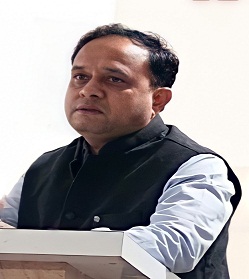
 प्राचार्य, डाॅ. देवेंद्र एस. भाेंगाडे, जीवन विकास महाविद्यालय, देवग्राम यांना राष्ट्रसंत तुकडाेजी महाराज नागपुर विद्यापीठाचा ‘उत्कृष्ट प्राचार्य’ पुरस्कार प्राप्त झाल्याबद्दल हार्दिक अभिनंदन!
 Principal Dr. Devendra Bhongade has once again been honored with the prestigious Dr. R. Krushnakumar Gold Medal for Best Principal at RTM Nagpur University for the academic session 2025–2026.
  Principal Dr. Devendra Bhongade has once again been honored with the prestigious Dr. R. Krushnakumar Gold Medal for Best Principal at RTM Nagpur University for the academic session 2025–2026.