Aim and Scope
The Antyoday Research Journal (ARJ) aims to create a global platform for scholars, academicians, scientists, and practitioners to present original, high-quality and ethically sound research that contributes to knowledge creation and real-world problem-solving. The journal encourages multidisciplinary research, fostering collaboration across various academic domains to generate innovative perspectives and holistic solutions to modern challenges. ARJ welcomes research that demonstrates novelty, methodological rigor, scientific value, and practical relevance, with a strong commitment to research ethics, originality, and authenticity. Submissions that contribute to theory building, policy analysis, technological advancement, social development, or sustainable innovation are particularly encouraged.
Disciplines Covered
The journal covers a wide range of disciplines, including but not limited to:
Social Sciences & Humanities
- Political Science
- Sociology
- Economics
- Psychology
- Philosophy
- History
- Education
- Public Administration
- Geography
- Anthropology
- Cultural Studies
- English, Hindi, Marathi Languages
- Literature (English, Marathi, Hindi)
- Fine Arts and Performing Arts
- Journalism and Mass Communication
- Library and Information Science
- Physical Education & Sports
- Gender Studies
Commerce & Management
- Business Administration
- Banking and Finance
- Accounting and Auditing
- Marketing Management
- Human Resource Management
- Entrepreneurship and Start-ups
- International Business
- Supply Chain and Logistics
- Corporate Governance
- Strategic Management
- Tourism and Hospitality Management
- Rural and Cooperative Management
- Financial Technology (FinTech)
- Business Ethics and Sustainability
Science & Technology
- Computer Science and Information Technology
- Artificial Intelligence and Machine Learning
- Data Science and Big Data Analytics
- Physics (Applied and Theoretical)
- Chemistry (Organic, Inorganic, Physical, Analytical)
- Biology and Life Sciences
- Environmental Science
- Biotechnology
- Nanotechnology
- Mathematics and Statistics
- Material Science
- Robotics and Automation
- Cloud Computing and Cyber security
- Renewable Energy and Climate Studies
Engineering & Innovation
- Civil Engineering
- Mechanical Engineering
- Electrical and Electronics Engineering
- Computer and Software Engineering
- Chemical Engineering
- Industrial and Production Engineering
- Instrumentation and Control
- Mechatronics and Automation
- Environmental and Sustainable Engineering
- Energy Systems and Power Engineering
- Structural and Construction Engineering
- Artificial Intelligence in Engineering
- Smart Cities and Infrastructure Development
- Design and Product Innovation
- Transportation and Urban Planning
- Aeronautical Engineering
Health & Life Sciences
- Public Health and Epidemiology
- Clinical and Medical Sciences
- Pharmacy and Pharmacology
- Nursing and Allied Health Sciences
- Biotechnology and Molecular Biology
- Biochemistry and Microbiology
- Nutrition and Dietetics
- Environmental and Occupational Health
- Health Policy and Systems Research
- Psychology and Mental Health
- Reproductive and Child Health
- Biomedical Engineering
- Genetics and Immunology
- Ayurveda and Traditional Medicine
- Health Informatics
- Yoga
Legal & Policy Studies
- Constitutional and Administrative Law
- Criminal Law and Justice
- Corporate and Commercial Law
- Environmental Law
- Cyber Law and Data Protection
- Intellectual Property Rights (IPR)
- Human Rights and Humanitarian Law
- International Law and Relations
- Governance and Public Administration
- Political Theory and Policy Analysis
- Comparative Legal Systems
- Legal Education and Ethics
- Media and Communication Law
- Gender and Law
- Law and Technology
Agriculture & Rural Development
- Agronomy and Crop Science
- Soil Science and Water Management
- Agricultural Engineering
- Horticulture and Floriculture
- Animal Husbandry and Veterinary Science
- Fisheries and Aquaculture
- Agricultural Economics
- Agricultural Extension and Communication
- Sustainable and Organic Farming
- Rural Development and Planning
- Cooperative and Microfinance Studies
- Food Science and Technology
- Climate-Smart Agriculture
- Agri-Business and Agri-Marketing
- Rural Entrepreneurship and Employment Generation
Quality, Novelty & Ethical Standards
ARJ maintains strict standards of academic excellence, originality and ethical integrity. Each manuscript is evaluated for:
- Novelty and Contribution
ARJ gives prime importance to originality and innovation in research. Every manuscript must present a unique contribution to its field, introducing new ideas, perspectives or findings that expand existing knowledge. The journal values creative thinking, theoretical advancement, and practical applicability, ensuring that each publication adds meaningful depth to global scholarship.
- Scientific Methodology and Logical Coherence
The journal emphasizes a strong methodological foundation in every study. Research papers should demonstrate well-structured research design, clear objectives, sound analysis, and logical interpretation of results. Clarity, consistency, and precision in argumentation are essential to ensure academic credibility and scientific rigor.
- Relevance and Interdisciplinary Value
ARJ encourages research that connects academic inquiry with real-world issues. Manuscripts should highlight practical implications, social relevance, or interdisciplinary significance that foster understanding across multiple domains. The journal believes that impactful research should not only inform theory but also inspire constructive change in society.As a journal is multidisciplinary, the freedom is given to individual researcher to present their own research study.
- Authentic Referencing and Source Credibility
Proper citation and use of authentic references are core expectations of the journal. Authors must use verified and credible academic sources to support their arguments, ensuring that their work aligns with global research standards. Accurate referencing enhances transparency, reliability and the overall scholarly value of a paper.
- Ethical Integrity and Academic Honesty
ARJ follows strict ethical policies to maintain trust in academic publishing. All submissions must be plagiarism-free, with due acknowledgment of others’ work. Responsible citation, originality and honesty in data representation are non-negotiable principles that define the journal’s commitment to ethical research.
ARJ believes that the future of research lies in the integration of ideas across disciplines. The journal therefore encourages collaborative and multi-disciplinary studies that combine insights from multiple fields—bridging the gap between science, technology, social development, and human values.
By publishing innovative and ethically responsible research, the Multidisciplinary Peer-Reviewed Research Journal strives to become a global hub for academic dialogue, creative inquiry and the pursuit of knowledge that benefits society at large.

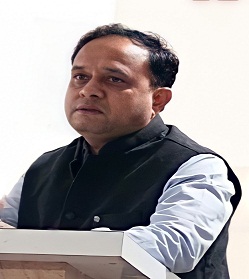
 प्राचार्य, डाॅ. देवेंद्र एस. भाेंगाडे, जीवन विकास महाविद्यालय, देवग्राम यांना राष्ट्रसंत तुकडाेजी महाराज नागपुर विद्यापीठाचा ‘उत्कृष्ट प्राचार्य’ पुरस्कार प्राप्त झाल्याबद्दल हार्दिक अभिनंदन!
 Principal Dr. Devendra Bhongade has once again been honored with the prestigious Dr. R. Krushnakumar Gold Medal for Best Principal at RTM Nagpur University for the academic session 2025–2026.
  Principal Dr. Devendra Bhongade has once again been honored with the prestigious Dr. R. Krushnakumar Gold Medal for Best Principal at RTM Nagpur University for the academic session 2025–2026.